TL;DR
Competitor research is a great way to find blog topics with proven demand. But it does not work for every business. If your competitors are not blogging, if your industry is too niche, or if you want to build a distinct voice rather than follow what others are doing, the buyer persona approach is the better option. This post covers how to build a full 3 to 6 month blog calendar from scratch using persona research and AI, in a single working session.
If you have not read the earlier posts in this series, start here to understand why most blogs fail and here for the competitor research approach.
Two Problems That Are Actually the Same Problem
The first problem is not knowing what to write about when competitor data is not an option. Either nobody in the niche is blogging with measurable results, the industry is too specific for competitor keywords to be meaningful, or the business simply wants to create content on its own terms rather than chasing what others are ranking for.
The second problem is that even when topic ideas exist, they never become a consistent publishing schedule. A blog calendar gets created in a meeting, lives in a Google doc for two weeks, and then quietly disappears. Publishing becomes irregular. Months go by. The blog never builds the compounding value it was supposed to.
These two problems look different on the surface but they come from the same place: there is no system underneath the content. The persona approach solves both at once. It gives you a method for generating months of relevant topics and a calendar that is specific enough to actually use.
Why Persona-Driven Content Works Differently
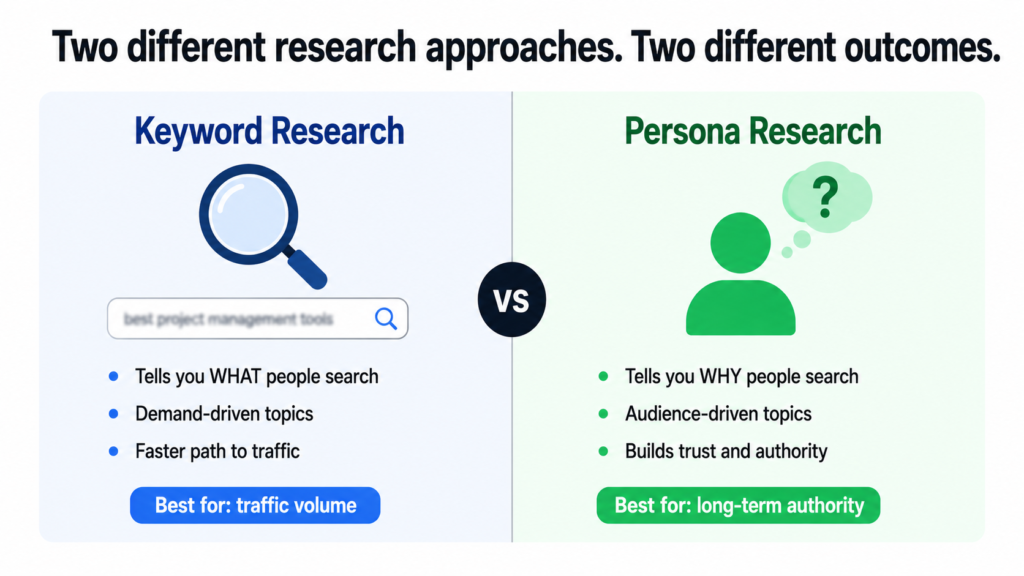
Keyword research tells you what people are searching for. Persona research tells you why they are searching for it and what they actually need when they get there.
Both matter. But for building long-term authority and genuine trust with your audience, persona-driven content wins. It speaks directly to the person behind the search rather than just matching the query. Readers feel understood. That is what makes them come back, share the content, and eventually reach out.
Content written without persona thinking tends to feel generic even when it is technically accurate. It covers the topic but it does not resonate with anyone in particular. It gets read and forgotten. It builds no relationship and no trust.
A blog that speaks to a specific person with a specific problem will always outperform a blog that speaks to everyone about a general subject. Specificity is what builds authority.
What a Buyer Persona Actually Is
A buyer persona is a detailed profile of an ideal customer. Not a demographic summary. A real picture of the person: their job role, their industry, what their day looks like, what keeps them stuck, what they are trying to achieve, what they search for when they have a problem, and what kind of content actually helps them make decisions.
Most businesses either have no defined personas or have ones that are too vague to be useful. Something like “marketing manager, 30 to 45, works at a mid-sized company” is not a persona. It is a demographic filter. A useful persona includes the specific frustrations, the exact questions they type into Google, and the outcomes they are trying to reach.
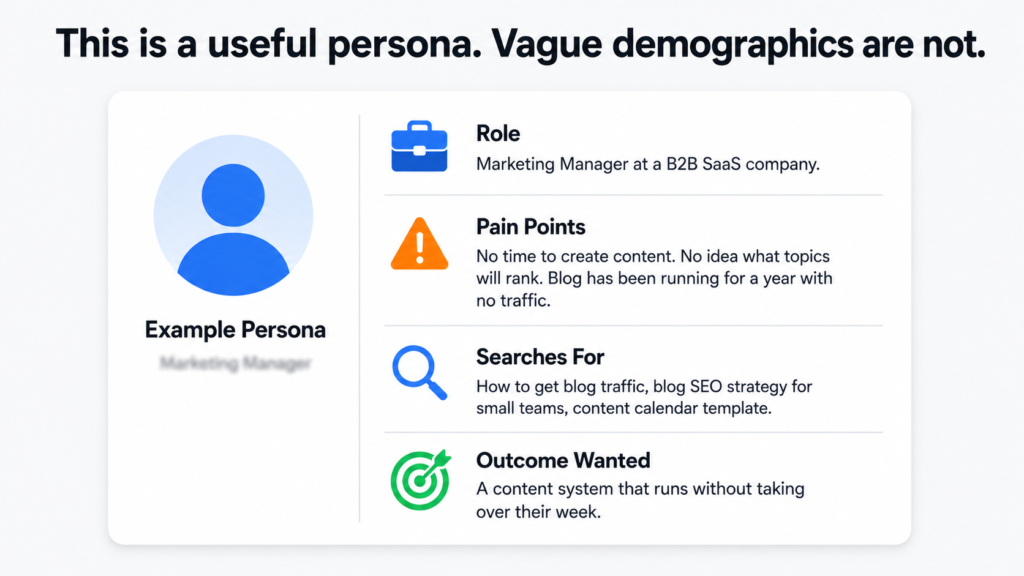
The good news is that you do not need a formal persona document to start. A rough description from someone who knows the customers well is enough to build on.
Why Blogs Without Persona Thinking Fail to Build Authority
The content is technically correct but feels like it could have been written for anyone. There is no consistent point of view. The topics jump around instead of building a coherent body of knowledge in one area. Readers do not feel like the brand actually understands their situation. They read, get the information they needed, and leave without ever considering the business behind the content.
Trust does not come from being informative. It comes from being specifically relevant to the person reading. That only happens when the content was built around a real understanding of who that person is.
The Full Process: From Personas to Published Calendar
Step 1 — Collect the buyer personas
Ask the business directly. Most will give you two to four personas without much prompting. What you need from each one: job title or role, the industry they work in, their biggest daily challenges, and the outcomes they are trying to achieve. If the business has never formally defined their personas, a rough description is fine to start. You are building a foundation, not a final document.
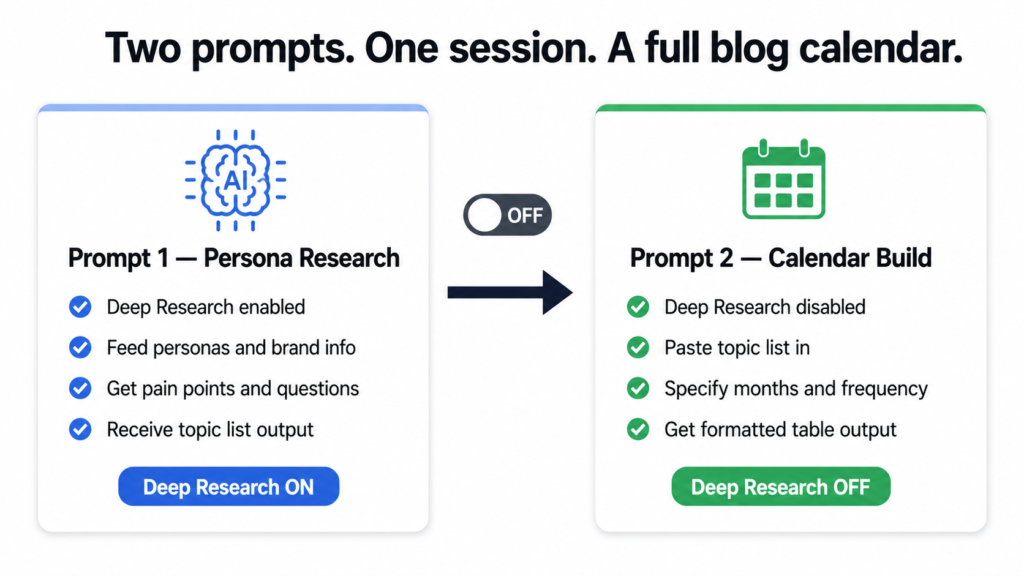
Step 2 — Use AI with Deep Research enabled
Open an AI tool that supports Deep Research mode. This feature allows the model to actively search the web rather than drawing only on its training data. That means the persona research it returns is grounded in current, real information: forums, communities, Reddit threads, LinkedIn discussions, industry publications, and survey data where it exists. This is what separates useful persona research from generic assumptions.
Step 3 — Run the persona research prompt
Feed the AI the business name and URL, a brief description of what it does and who it serves, the buyer personas, and the target location. Then ask it to research each persona in depth and return a specific number of blog topics based on what it finds. Here is the exact prompt to use:
I am building a blog content strategy for [Brand Name].
The website is [URL].
The brand [describe what it does and who it serves].

The buyer personas are:
[List each persona with job title or description]

Target location: [country or region]

Please use deep research to give me a detailed breakdown
of each persona including:
- Who they are
- Their biggest pain points and daily challenges
- The questions they commonly search for online
- The type of information they look for before making decisions
- What content would genuinely help them

After completing the research, generate [number] blog topic
ideas directly based on the pain points and questions you found.

Topics should be educational and informational, not promotional.
Format the topics as a numbered list.
Step 4 — Turn off Deep Research before the next step
Once you have the topic list, disable Deep Research. The next step is a formatting and planning task, not a research task. Keeping Deep Research on slows things down without adding value at this stage.
Step 5 — Build the calendar with a second prompt
Paste the topic list back into the AI and ask it to turn those topics into a structured blog calendar. Here is the prompt:
Using the blog topics listed above, please create a blog
calendar for [Brand Name].

Starting month: [month and year]
Blogs per month: [number]
Total duration: [number of months]

For each blog topic include:
- The topic title
- A brief content outline covering the key points
- The target buyer persona this post is written for
- A suggested publish date

Format this as a table with four columns:
Topic Title | Content Outline | Persona | Publish Date

So I can copy it directly into a spreadsheet.
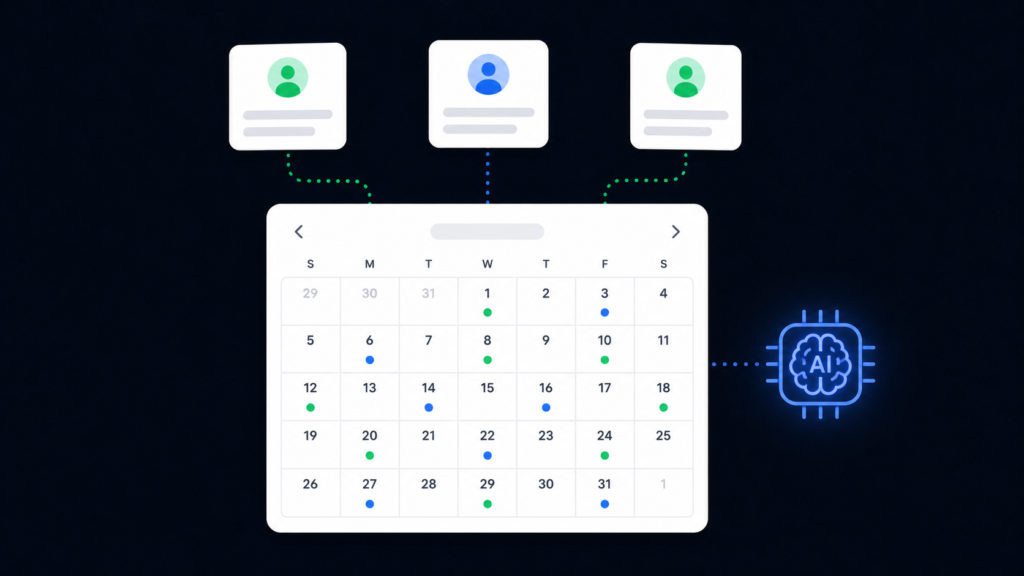
In one working session, you now have a 3 to 6 month blog calendar with clear topics, content outlines, persona targeting, and publish dates. A writer can start immediately without further briefing. A client can review it as a deliverable.
What the Calendar Actually Gives You
The obvious output is a publishing plan. But the less obvious output is the removal of decision fatigue. One of the main reasons blogs become inconsistent is that every publishing cycle starts with the question of what to write next. That question never fully gets answered, the deadline passes, and the blog goes quiet for another month.
With a calendar in place, that question is already answered for the next six months. The only job left is execution. That shift from deciding to doing is what makes consistent publishing actually happen in practice rather than just in plans.
For consultants and agencies, the calendar also works as a client deliverable. It demonstrates strategic thinking beyond just writing. It shows that the content has a reason to exist, a defined audience, and a structure that builds toward something over time.
Why Consistency Is the Most Underrated Factor in Blog SEO
One blog post almost never produces meaningful results on its own. SEO from blogging is a compounding activity. The value builds as more posts are published, more keywords get covered, and Google increasingly recognises the website as a trustworthy source on a specific set of topics.
A business that publishes four well-targeted posts per month for six months has 24 pages competing for organic traffic. A business that publishes randomly has gaps, inconsistency, and a much weaker topical authority signal. Google notices the difference.
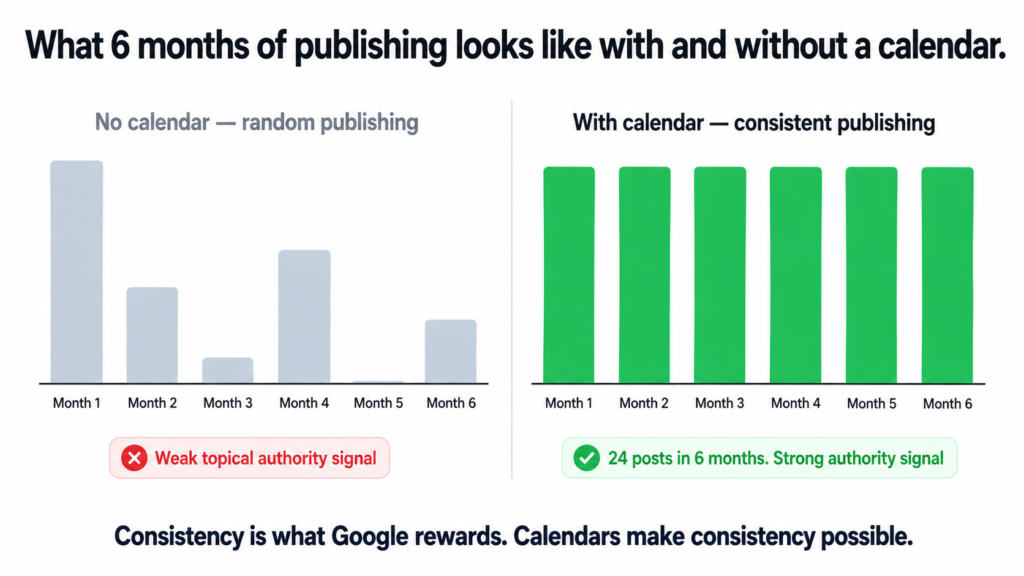
The calendar is not just a content planning document. It is the system that makes compounding SEO possible by turning irregular publishing into a predictable habit.
Topical authority does not come from one great post. It comes from consistent coverage of a specific subject area over time. Google needs to see a pattern before it starts treating a website as an authority on anything.
Competitor Approach vs Persona Approach — Which One Is Right
The competitor approach works best when there is proven search demand in the niche, multiple competitors are already getting blog traffic, and the primary goal is capturing a share of existing organic traffic as efficiently as possible.
The persona approach works best when the industry is niche or specialist, competitors are not actively blogging, the business wants to build a distinct voice, or the goal is long-term audience trust rather than short-term traffic volume.
The strongest content strategies use both. The competitor approach fills the calendar with high-demand topics that have a direct path to organic rankings. The persona approach fills the gaps with audience-first content that builds deeper relevance and trust over time. Together they cover both the traffic goal and the authority goal that I wrote about in the first post in this series.
Want Help Building This for Your Business?
A blog calendar built on real persona research gives you months of direction in a single session. But the research is only as good as the understanding of the audience behind it. If you want to build a content strategy that is actually tailored to your customers and your business goals, this is something I work through with clients directly.
Whether you need a full content strategy, help with SEO, or a conversation about what your blog should actually be doing for your business, book a call and we can get into the specifics.
See how I approach content and SEO strategy →
Dhruv is an SEO consultant working with business owners, founders, and agencies. If you want a blog that actually builds something, this is where to start.

Dhruv The SEO Guy
I do SEO for agencies, founders, and business owners. No fixed packages. No fluff. Just technical, revenue-focused strategies that scale your organic presence securely.
Ready to dominate search?
Stop reading about algorithms and start ranking. Book a quick 1-on-1 strategy call below.
Book a Strategy Call →