
Published by Dhruv — SEO Consultant for Agencies & Businesses
TL;DR
I built an AI workflow to write long-form blog content at scale. It took four rounds of iteration, broke in four different ways, and never fully hit the original word count target. But it now produces a clean, on-brand 1,300 to 1,450-word draft in about 3 minutes, costs $0.20 per post, and needs only 5 to 10 minutes of human editing. Here is exactly what happened, what failed, and what I actually ended up with.
I want to start with something most AI content posts will not tell you: the first version was pretty bad.
Not unusable. Not embarrassing. But nowhere near what I needed. And the gap between “it kind of works” and “I would actually publish this” took a lot longer to close than I expected.
This is the honest version of that story.
What I Was Trying to Build
The goal was a repeatable system for long-form blog content. Each post needed to land between 1,950 and 2,100 words, follow a specific structure, carry 4 to 5 internal links placed naturally, stay within short readable paragraphs, and sound like it was written by someone who actually knows the industry. No filler. No generic advice dressed up as insight.
Before this system existed, one blog post took 4 to 5 hours of combined writing and editing time, and cost anywhere from $50 to $150 depending on who was writing it. Across 52 posts a year, that is 208 to 260 hours and up to $7,800. Those numbers made it very easy to justify building something better.
Round One: It Just Stopped Halfway
The first approach was simple. Write one prompt, get one blog post. It seemed reasonable.
What actually happened was that the model would write a decent introduction and a solid first section, then quietly start losing structure. By the time it reached the middle of the article, paragraphs were getting longer, sections were getting thinner, and the whole thing just stopped around 950 to 1,200 words. About half of what I needed.
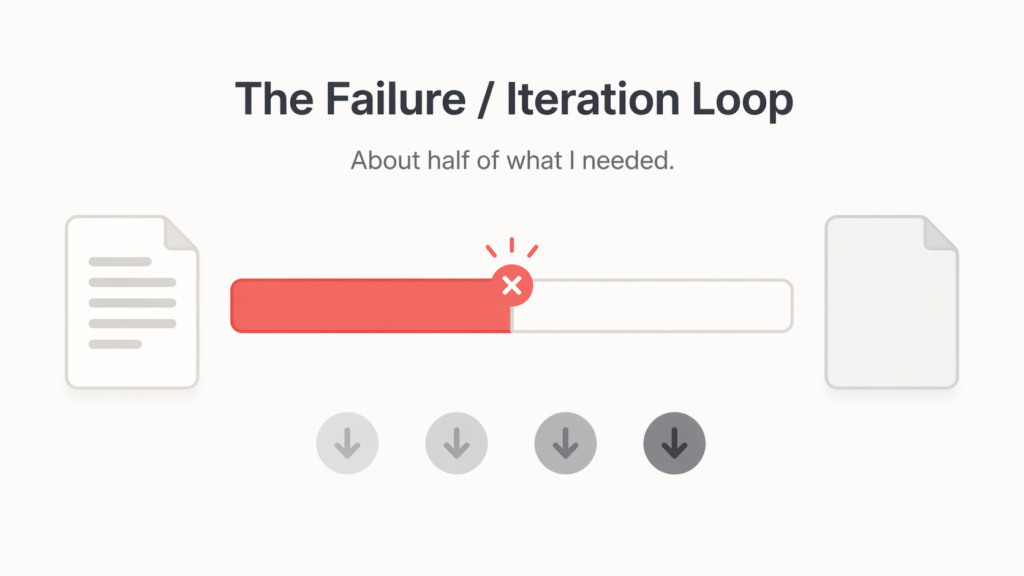
The links were almost never there. When they were, they appeared once, usually in the wrong section. Paragraph length crept up to 90 to 150 words regularly. The brand voice held for the first third and then drifted.
The lesson from round one was simple: a single prompt cannot hold the shape of a long article. The model does not forget what you asked for, but it does lose discipline over distance.
Round Two: Split It Into Two Passes
The fix seemed obvious. Break the article into two prompts. First prompt handles the introduction and the first three sections. Second prompt handles the remaining sections, the checklist, and the close.
This was better. The structure got more consistent and the output felt more controlled. But two new problems appeared almost immediately.
First, the total word count only reached 1,250 to 1,450 words. Still short. Second, the second prompt kept repeating the article title at the top of its output, even when I told it not to. Every single time. It was one of those things that seemed easy to fix with a clearer instruction, and then kept happening anyway.
Two-pass generation was clearly the right direction. But prompting alone was not going to solve everything.
Round Three: Stop Trying to Fix Everything in the Prompt
This was the turning point, and it came from accepting something uncomfortable: some problems are easier to fix with code than with words.
The internal linking issue was a good example. Asking the model to place links naturally and distribute them across the article produced inconsistent results. Sometimes it worked. Sometimes all four links landed in the same paragraph. Trying to write a prompt that reliably fixed this was a diminishing returns exercise.
So instead, I introduced ALL CAPS placeholders inside the generated content. The model would write something like “working with a NYC EVENT PRODUCTION team means…” and a post-processing script would replace that placeholder with the actual hyperlink after generation. Clean output during writing, correct links in the final version.
The duplicate title problem got solved the same way. A function scanned the combined output for any repeated H1 and removed it automatically. Two lines of code that worked every time, compared to prompt instructions that worked most of the time.
Round Four: Tighten Everything and Accept the Tradeoff
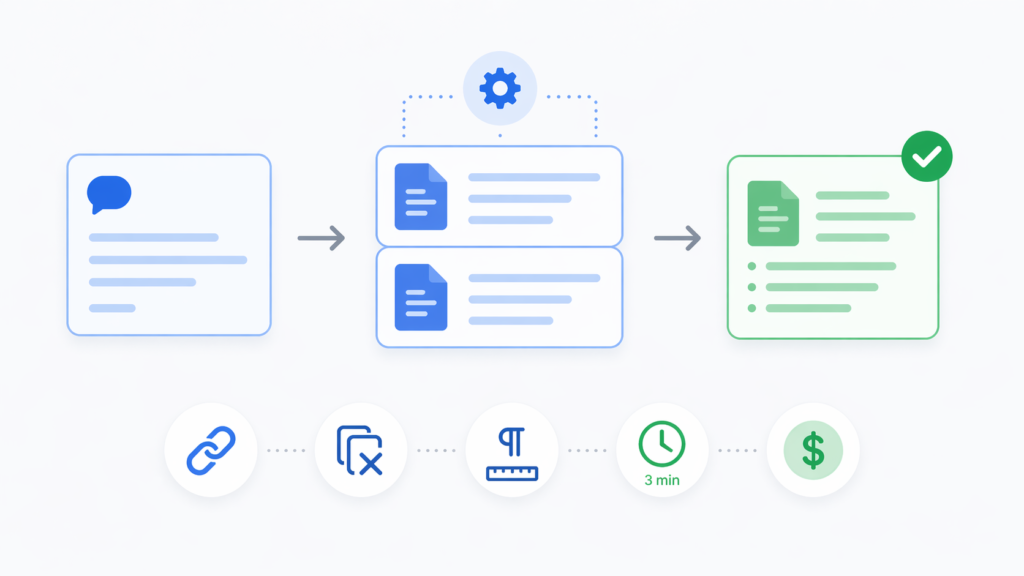
The final version of the system pulled everything together. Two-pass GPT-4o generation with lower temperature for consistency, maximum token allowance to reduce early stopping, strict paragraph length instructions, the duplicate title remover, and the link post-processing step.
Here is what stable output looked like:
- Word count: 1,320 to 1,450 words per post
- Generation time: around 3 minutes
- Human editing time: 5 to 10 minutes
- Internal links: 4 to 5, placed naturally
- Paragraph length: almost always under 70 words
- Cost per post: approximately $0.20
- Brand voice: consistently strong
The one thing that did not get solved was the word count target. The original goal was 1,950 to 2,100 words. The system never reliably got there. After a while, I stopped trying to force it and started asking a different question: is a consistent 1,380-word post that ships every time actually worse than a 2,000-word post that requires constant intervention?
For this workflow, the answer was no. The shorter, cleaner draft was more useful.
What the Numbers Actually Look Like
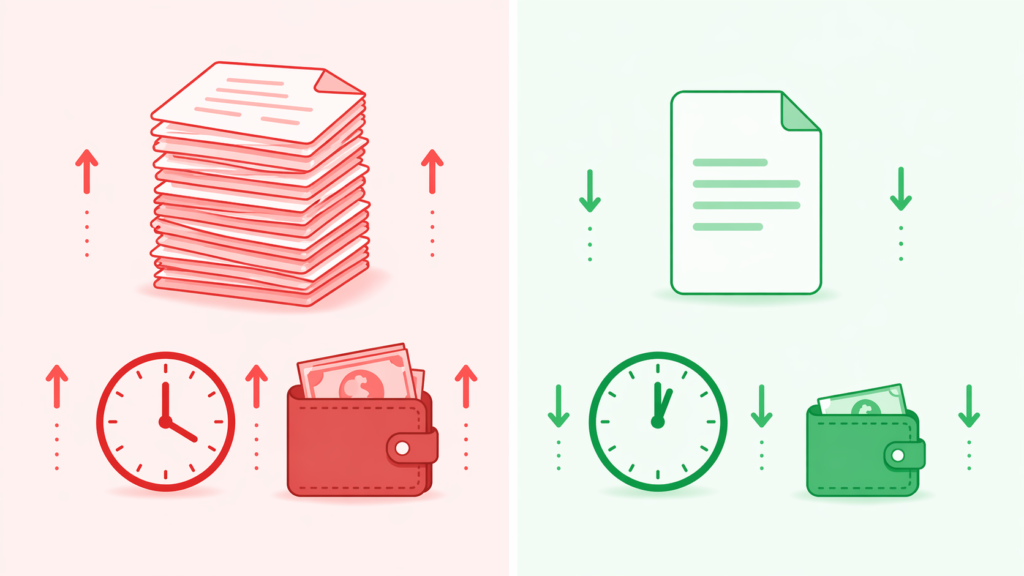
Compared to the manual baseline, the impact was significant across every metric that mattered.
- Annual writing time dropped from 208 to 260 hours down to roughly 26 to 39 hours including editing
- Cost per post dropped from $50 to $150 down to about $0.20 in generation cost
- Annual content cost dropped from up to $7,800 to just over $10 in API spend
- Time saved across 52 posts: roughly 180+ hours per year
The word count shortfall meant each post needed a bit more from the human editor to expand key sections. But that tradeoff was worth it given everything else the system got right.
The Four Things That Kept Breaking
If you are building something similar, these are the failure modes worth knowing about before you hit them yourself.
Word count collapse. Single-pass prompts consistently fell short. The model does not run out of knowledge, it just loses structural discipline over long outputs. Two-pass generation is the practical minimum for anything over 1,200 words.
Link clustering. Left to itself, the model tends to place multiple links close together or in a single section. Post-processing is far more reliable than prompt instructions for solving this.
Title duplication. The second prompt often repeated the article title even with explicit instructions to skip it. A simple programmatic check fixed this permanently.
Paragraph bloat. Explanation-heavy sections regularly ballooned past 140 words. Explicit limits help, but a human pass is still the most reliable way to catch this.
The Actual Takeaway
The system did not produce the perfect 2,000-word automated blog post I originally planned for. What it produced was something more practical: a dependable, brand-consistent draft that is ready for a light human edit in under 10 minutes, at a cost that makes weekly publishing genuinely viable for any business.
The biggest mindset shift was treating the human editor as part of the system rather than as evidence that the system failed. The AI handles the structural heavy lifting. The editor catches what slipped through. Together, they produce something neither would get to as quickly alone.
If you are trying to build the same thing, start with two-pass generation, move formatting fixes into post-processing early, and pick a word count you can hit consistently rather than one you can hit occasionally.
Want to Talk Content Systems or SEO Strategy?
This kind of workflow thinking sits at the intersection of content operations and SEO. If you are trying to build something similar for your agency or business, or if you just want to talk through what a content system could look like for your specific situation, I am happy to get into it.
Dhruv is an SEO consultant working with agencies, founders, and business owners. 500+ projects. 6+ years. No fluff.

Dhruv The SEO Guy
I do SEO for agencies, founders, and business owners. No fixed packages. No fluff. Just technical, revenue-focused strategies that scale your organic presence securely.
Ready to dominate search?
Stop reading about algorithms and start ranking. Book a quick 1-on-1 strategy call below.
Book a Strategy Call →