TL;DR
Answer engine optimization (AEO) is structuring content so AI tools like ChatGPT, Google AI Overviews, and Perplexity cite it as a source for answers, not just rank it for clicks. With Gartner projecting a 25% drop in organic search traffic by 2026 and AI-referred visitors converting ~4.4x better, brands that aren't part of AI answers are losing visibility at the exact moment buyers form opinions. The platforms behave differently (Google AI Overviews lean on top-10 rankings, ChatGPT leans on Wikipedia and authoritative sources, Perplexity rewards freshness, Copilot leans on LinkedIn). What gets cited: clear sequential headings, recently updated content (83% of commercial AI citations come from pages updated within 12 months), and specific first-party data/stats over generic advice. The 6-step strategy: baseline your current AI visibility, refresh high-value pages, add real numbers/case studies, fix heading structure, build topical depth on 2-3 areas, and track citations alongside rankings. Includes a real example (Midstream Marketing: 1.9% → 8.9% AI visibility, +368%, in 90 days).
What is answer engine optimization?
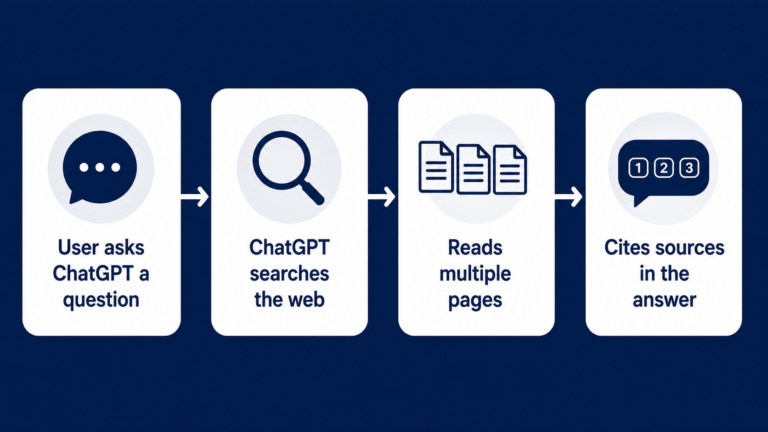
Answer engine optimization, or AEO, is the practice of structuring your content so that AI tools like ChatGPT, Google AI Overviews, Perplexity, and Gemini can pull it out, understand it, and use it as the source for an answer.
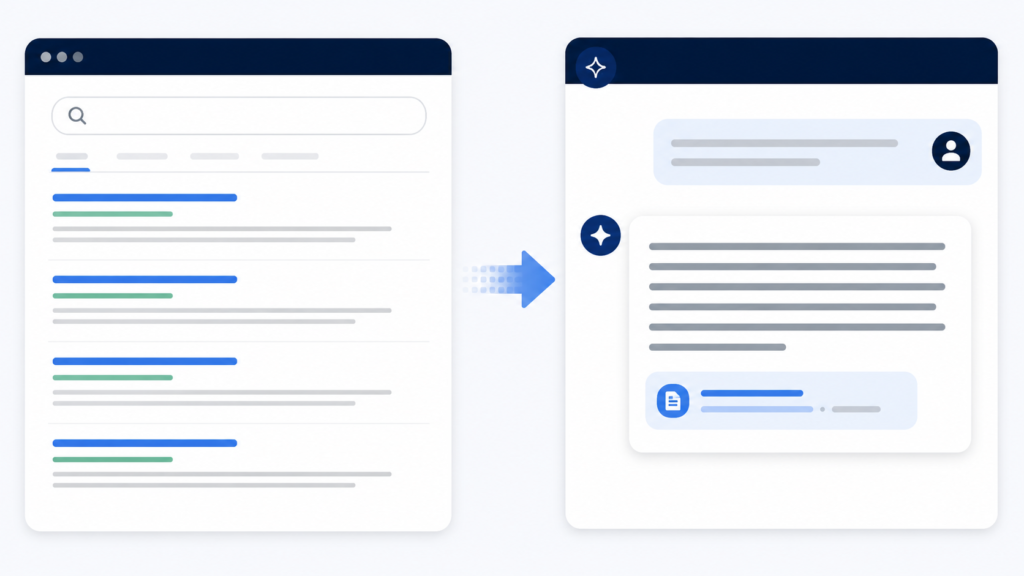
For years, SEO meant one thing: get your page to rank high enough in Google that someone clicks on it. AEO is a different goal. The aim is to get your brand, your data, or your point of view mentioned inside the answer itself, even if the person never clicks through to your site.
This is not a replacement for SEO. It is closer to a second layer on top of it. Good AEO still depends on the basics that have always mattered: a real domain with some authority, content that is structured clearly, and information that is accurate and current. What changes is the target. You are no longer writing only for a person scanning a results page. You are also writing for a model that needs to extract a fact, a definition, or a recommendation and decide whether your source is trustworthy enough to cite.
This guide covers what answer engine optimization means in practice, why it matters now, how the major AI platforms differ in what they cite, and how to build an AEO strategy you can actually execute, with a real example of what it looks like when it works.
Why this matters right now
The numbers on this shift are hard to ignore. Gartner has projected that organic search volume could drop by around 25% by 2026 as more people get answers directly from AI chatbots and assistants instead of clicking through to websites. At the same time, AI-referred traffic to websites has grown sharply, and research from AirOps found that AI search visitors convert at roughly 4.4 times the rate of traditional organic visitors.
So the picture is not “AI search is killing traffic.” It is closer to “fewer people are clicking, but the ones who do click are much further along in their decision.” If your brand is not part of the answer at all, you are invisible to a growing share of buyers during the exact moment they are forming an opinion about who to trust.
This is the gap most businesses do not realize they have. Traditional SEO tools will tell you where you rank on Google. They will not tell you whether ChatGPT has ever heard of you, or whether Perplexity cites your competitor every time someone asks about your category.
How AEO is different from traditional SEO
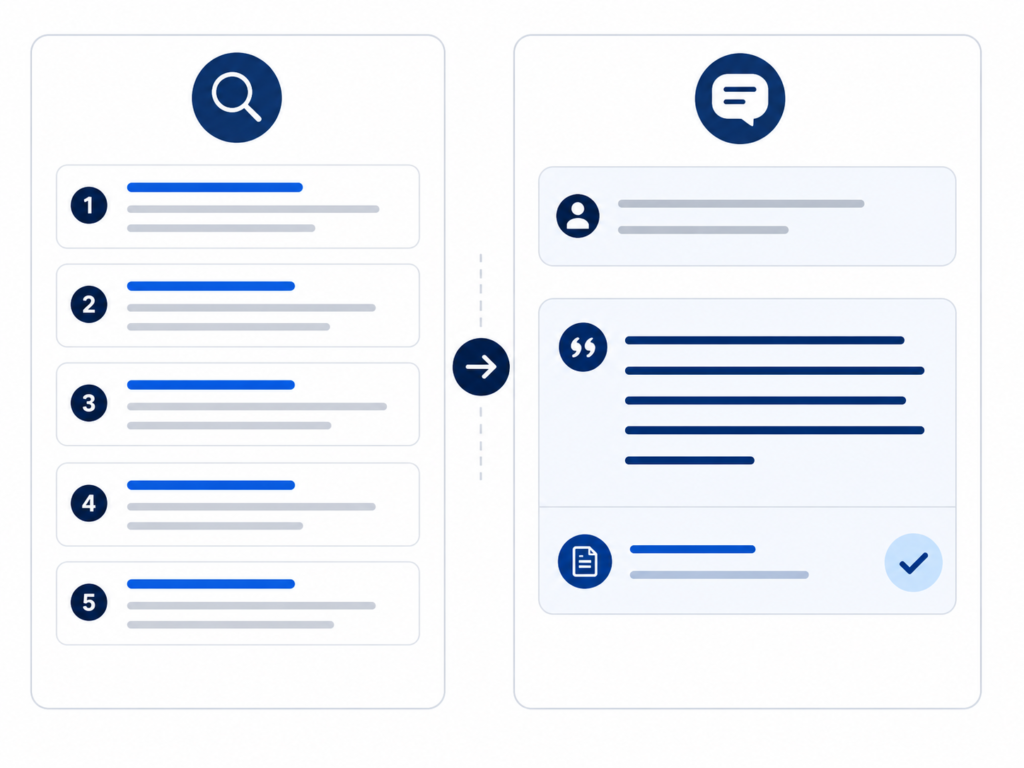
The two disciplines overlap more than people expect, but the priorities shift in a few specific ways.
Traditional SEO is built around keywords, backlinks, and ranking positions. The win condition is a click. AEO is built around structure, freshness, and citation-worthy facts. The win condition is being the source an AI model pulls from, whether or not that leads to an immediate visit.
AEO also spreads across more platforms than SEO ever had to. SEO was largely a Google game. AEO means thinking about how several different AI systems each pull and weight sources, because they do not all behave the same way.
None of this means abandoning what already works. It means adding a layer of structure and proof on top of content that was already doing reasonably well in search.
How the major AI platforms source their answers
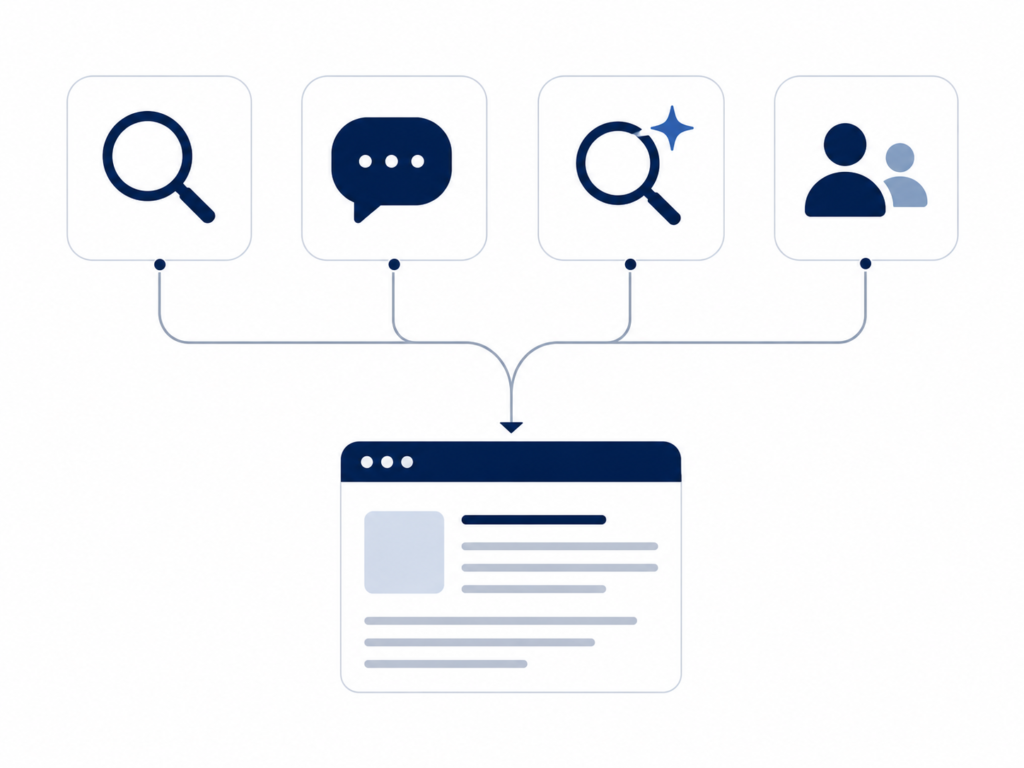
One thing that makes AEO harder than traditional SEO is that there is no single algorithm to study. Each platform has its own habits, and they shift as the models get updated. Here is what current research shows about the main ones.
Google AI Overviews still pull mostly from pages that are already ranking in the top 10 organic results for a query. If your page is not visible in classic Google search, it has very little chance of being cited in an AI Overview for the same query. This is the clearest overlap between SEO and AEO. AI Overviews now appear in roughly half of all Google searches, so this single platform carries a lot of weight.
ChatGPT leans heavily on a smaller set of high-authority reference sources. Industry analysis of ChatGPT citations has found that a huge share, close to half, come from Wikipedia. After that, established publications, official documentation, and primary sources for tools and products tend to dominate. Getting cited directly on ChatGPT often depends more on broader brand mentions and being referenced by the sources ChatGPT already trusts than on any single page you publish.
Perplexity behaves differently again. It rewards freshness and source diversity more than the others, and it pulls more heavily from forums, video platforms, and recently published content. If your audience uses Perplexity, recency and active publishing matter more than they would for, say, ChatGPT.
Microsoft Copilot leans on LinkedIn for business and B2B queries more than any other platform. If you are targeting a professional audience, a content strategy that ignores LinkedIn entirely is leaving a real gap in Copilot visibility.
The takeaway is not that you need a different strategy for every platform. It is that you should know which one or two platforms your buyers actually use, and weight your effort accordingly instead of spreading it evenly across all of them.
What actually makes content AEO-friendly
A few patterns show up consistently in research on what gets cited by AI models versus what gets skipped.
Clear, sequential heading structure matters more than people think. AirOps’ 2026 State of AI Search Report found that pages with logically ordered headings were significantly more likely to be cited, because the model can map the structure of the page to the structure of the question being asked.
Freshness matters, especially for anything commercial. The same report found that 83% of AI citations for commercial and evaluation-stage queries came from pages updated within the past 12 months, and more than 60% came from pages refreshed within the last six months. A page that has not been touched in two years is competing at a real disadvantage, even if the information in it is still technically correct.
Specificity beats generic advice. A Princeton study on Generative Engine Optimization found that adding expert quotes, statistics, and citations to a page measurably increased how often it got pulled into AI-generated answers, with statistics alone boosting visibility by around 30%. This lines up with what we have seen in practice. First-party data, things like your own case study numbers or a benchmark you measured yourself, tends to earn citations that a generic best-practices paragraph never will, because the AI model has nowhere else to get that exact number.
What we did for one client, and what happened
We worked with Midstream Marketing, an agency serving financial advisors, on exactly this problem. Going in, their AI visibility across major models sat at 1.9%. In plain terms, if you ran a hundred relevant AI conversations about their category, their brand showed up in fewer than two of them.
We ran 214 simulated conversations across seven AI model families using 31 prompts mapped to their actual buyer personas. That gave us a map of where they were already showing up, where competitors were dominating, and which topics had the most room to move.
From there the work focused on three things: prioritizing the topics where Midstream had a genuine edge, like outsourced CMO services for financial advisors, building up the sources that AI models were already citing in that space so Midstream’s domain got pulled into more of them, and aligning content to the specific questions their two core buyer types were actually asking.
After 90 days, overall AI visibility went from 1.9% to 8.9%, a 368% increase. Their strongest topic, outsourced CMO services, went from 11% to 24% visibility. Domain citations across AI platforms rose from 13 to 26. You can read the full breakdown in our Midstream Marketing AEO case study.
The point of sharing this is not the percentages themselves. It is that visibility in AI search is measurable, and it moves faster than most people expect once you know which gaps to close.
Building an AEO strategy step by step
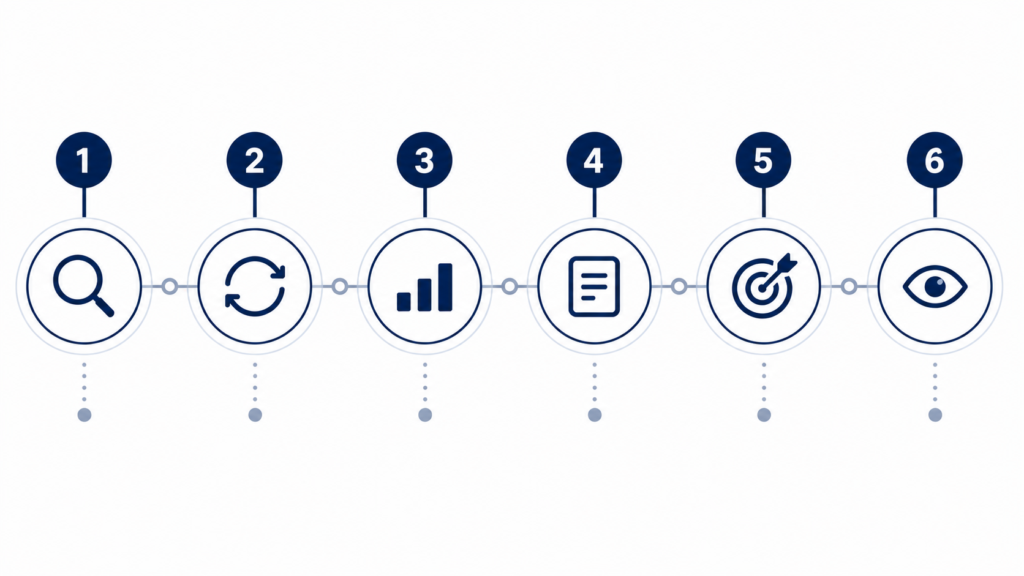
An AEO strategy does not need to be complicated to be effective. The work breaks down into a few stages, and most of the early gains come from getting the first two right.
Step 1: Establish your baseline. Before changing anything, find out where you actually stand. Run a set of realistic questions your buyers would ask through ChatGPT, Perplexity, and Google AI Overviews, and note whether your brand comes up, and who comes up instead of you. This baseline is the single most useful thing you can have, because it tells you which topics and which platforms are worth prioritizing.
Step 2: Audit and refresh your highest-value pages. Go back through the pages that already get the most traffic or already rank reasonably well, and check when they were last meaningfully updated. Given how strongly freshness correlates with citation rates, a page from a couple of years ago that still gets traffic is often a better investment to update than a new page from scratch.
Step 3: Add real numbers wherever you can. Look for places where you can include a result you measured, a benchmark from your own work, or a before-and-after from a client. These are the details that give an AI model a reason to cite you specifically instead of a competitor saying roughly the same thing in vaguer terms.
Step 4: Fix your heading structure. Headings should read like a logical breakdown of the topic on their own, the way a table of contents would. If someone only read your H2s and H3s, would they understand the shape of the answer? If not, restructure before writing more content.
Step 5: Build topical depth around two or three areas. Pick the topics where you have a genuine point of view or track record, not just generic competence, and go deep on those first. Trying to be cited for everything at once spreads your authority too thin to move the needle anywhere. This is also where supporting content comes in: a strong pillar page on a topic, backed by several focused posts that each go deeper on one piece of it, tends to build authority faster than the same number of standalone, unrelated posts.
Step 6: Track citations alongside rankings. Rankings tell you how you are doing in classic search. Citation tracking tells you how you are doing in AI search. Treat them as two separate metrics that both need attention, since a page can rank well and still never get cited, or vice versa.
Common mistakes to avoid
A few patterns come up often enough to be worth calling out directly.
Treating AEO as a one-time project rather than an ongoing practice. Given how much weight freshness carries in citation rates, a page optimized once and never revisited will lose ground over time, even if nothing about the underlying information has changed.
Chasing every platform at once instead of the one or two your audience actually uses. A B2B brand whose buyers live on LinkedIn gets more out of strengthening Copilot visibility than spending equal effort on Perplexity.
Publishing generic advice with no first-party data. This is the content that is easiest to write and hardest to get cited, because an AI model has dozens of other sources saying the same thing in roughly the same words.
Ignoring the connection between classic SEO rankings and AI citations. Google AI Overviews in particular still draw heavily from top-10 organic results, so neglecting fundamentals in favor of “AI-specific” tactics tends to backfire.
Where this fits with everything else
AEO is not a separate track from your content strategy. It is a lens you apply to the content you are already planning to write. If you have read our pieces on building a blog strategy and keeping it consistent, the same foundation applies here: a clear plan, real data, and content built around what your audience is actually asking. AEO just adds one more question to ask before you hit publish: if an AI model needed to answer this exact question, would it have a reason to pull from this page?
If you want a clearer picture of where your brand currently stands in AI search and what an AEO strategy would look like for your specific category, you can see our full range of SEO and AEO services or book a call and we can run a quick visibility check together.

Dhruv The SEO Guy
I do SEO for agencies, founders, and business owners. No fixed packages. No fluff. Just technical, revenue-focused strategies that scale your organic presence securely.
Ready to dominate search?
Stop reading about algorithms and start ranking. Book a quick 1-on-1 strategy call below.
Book a Strategy Call →